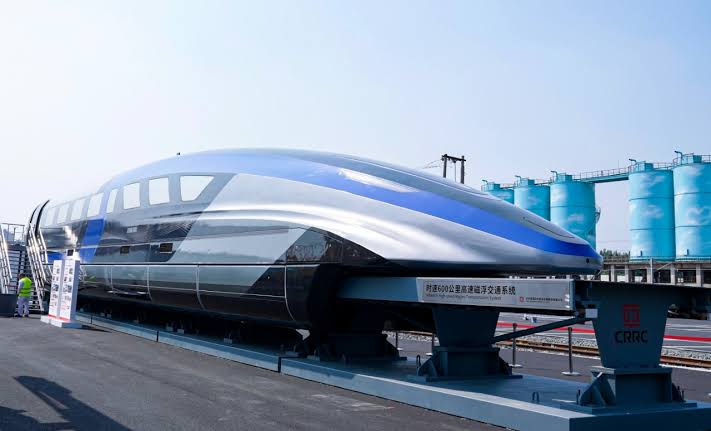
China’s high-speed rail engineers have achieved a major transport milestone after successfully operating a full-scale magnetic levitation (maglev) train at speeds exceeding 600 km/h inside a specialized low-vacuum test pipeline in Shanxi Province.
The experiment, conducted by the China State Railway Group, aims to pave the way for hyper-speed intercity passenger corridors capable of rivaling commercial air travel speeds.
Overcoming Aerodynamic Resistance
By housing the maglev track inside a depressurized concrete tube, engineers effectively eliminated the primary barrier to land speed: air resistance.
"Operating maglev vehicles inside low-pressure environments allows us to achieve flight-like velocities on land while cutting energy consumption dramatically," explained the project's lead engineer.
Core innovations driving the breakthrough:
Superconducting Magnets: Liquid-nitrogen-cooled magnets levitate the vehicle millimeters above the guide track, eliminating physical friction.
“Engineers in Shanxi Province successfully propelled a full-scale magnetic levitation train past 600 km/h inside a low-pressure test pipeline, setting a world record for ground transportation.”
Pneumatic Vacuum Seals: Low-pressure tube design reduces atmospheric drag by up to 70% compared to open-air tracks.
Target Routes: Strategic planners envision connecting Beijing and Shanghai via high-speed maglev lines, cutting travel time to under two hours.
Safety Testing: Secondary trials will evaluate automated emergency braking and passenger cabin pressurization at 800 km/h.
Global Transport Race: European and North American transit firms are studying vacuum-tube maglev designs to modernize intercity rail networks.
Read more transportation insights on our Business section.
How we reported this
Compiled from technical releases published by China State Railway Group and aerospace engineering journal updates.